TOOLS & GEAR
Oil Sprayer Clogs, Sputters or Leaks
THE SHORT ANSWER
A sputtering sprayer usually has hardened oil in the nozzle and dip tube. Soak the head in hot water with a drop of dish soap for twenty minutes, work the pump under hot water until it runs clear, and dry it before refilling. Thick oils and anything with solids — infused oil, unfiltered olive oil, marinade — will clog any sprayer, so keep those in a bottle with a pour spout and reserve the sprayer for thin, refined oils.
pitandsear participates in the Amazon Services LLC Associates Program. If you buy through a link on this page we may earn a commission at no extra cost to you. Full disclosure.
Check these first (they cost nothing)
- Look at what is in it. Extra-virgin olive oil, infused oil, anything with herb fragments or sediment will clog any fine nozzle eventually.
- Check how long the oil has been sitting. Oil oxidizes and thickens in the bottle, and thick oil is what blocks the mechanism.
- Pump it a dozen times with the lid off. If pressure builds and holds, the pump is fine and the blockage is in the nozzle.
- Try warm water in it. If water sprays cleanly and oil does not, you have a viscosity or clog problem rather than a broken pump.
What's actually causing it
These are ordered deliberately. Number one is the cause that turns out to be the answer most often, so work down the list rather than jumping to the one that sounds most dramatic.
Polymerized oil hardening in the nozzle
Most commonHow to confirm it
The spray is a weak dribble or an uneven jet rather than a mist, and warm water sprays through fine. Look into the nozzle orifice under a bright light for a varnish-colored film.
How to fix it
- Disassemble the head as far as the design allows and drop the parts into hot water with a drop of dish soap.
- Leave them 20 minutes, then work the pump under running hot water until it runs clear.
- Clear the orifice itself with a fine pin or a bristle from a brush, working from the outside in.
- Dry every part fully before reassembly — water left inside emulsifies with the next fill.
- Refill and test with water first to confirm the mist pattern has come back.
Repair or replace — Fix it yourself. Twenty minutes of soaking recovers most sprayers that people were about to throw out.
The wrong oil for the mechanism
CommonHow to confirm it
It clogs again within a week or two of every clean. Check the bottle: unfiltered olive oil, infused oil, or anything with visible sediment or herb fragments will do this indefinitely.
How to fix it
- Reserve the sprayer for thin, refined oils — grapeseed, canola, refined sunflower.
- Keep infused and unfiltered oils in a bottle with a pour spout instead.
- If your sprayer has a filter or mesh on the dip tube, clean it whenever you refill.
- Never put marinade through a sprayer; solids and sugar together will finish it.
Repair or replace — Fix it yourself by changing what goes in. A sprayer with a proper dip-tube filter tolerates more, but no sprayer tolerates solids.
What you'll need
 Best Overall
TrendPlain
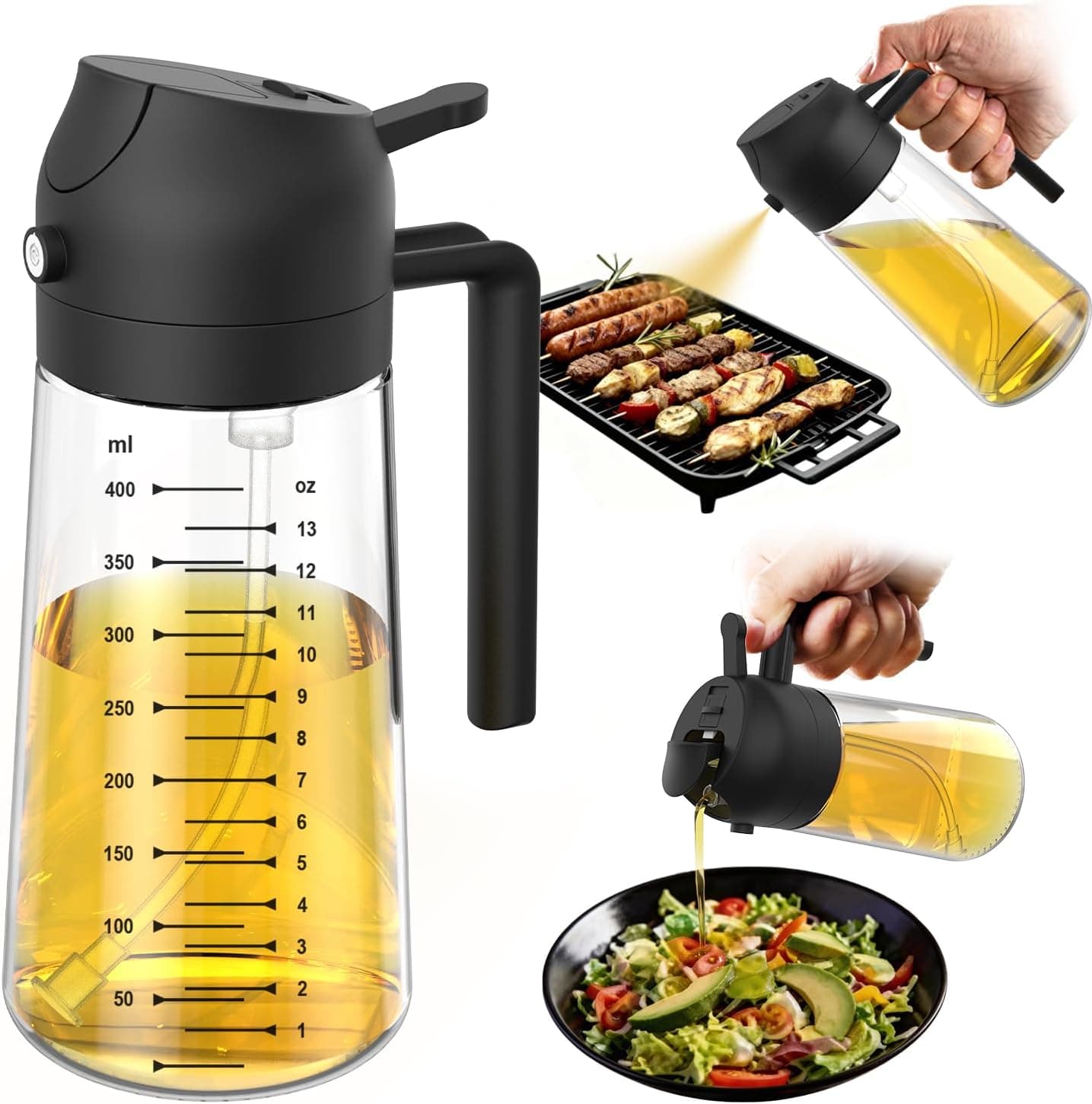
TrendPlain 2-in-1 Glass Oil Sprayer, 16 oz
Best for one bottle that both mists and pours
Two modes in one bottle: a mist for coating food evenly and a pour spout for measuring into a pan. That combination is what stops most people keeping a second bottle on the counter. Glass rather than clear plastic means no plastic taint and an easier job getting it properly clean.
16 oz glass, spray or pour
Old, oxidized oil that has thickened
CommonHow to confirm it
The oil smells stale or slightly rancid, has darkened, or pours noticeably more slowly than fresh oil from the same bottle.
How to fix it
- Empty it, wash the bottle in hot soapy water and dry it completely.
- Refill with small amounts you will use within a few weeks rather than filling to the top.
- Never top off — old oil at the bottom keeps aging and seeds the next batch.
- Store it out of direct sun and away from the grill cabinet, where residual heat accelerates oxidation.
Repair or replace — Fix it yourself. Smaller fills used faster is the whole fix, and it makes the oil taste better too.
Overfilling, which leaves no air space to pressurize
CommonHow to confirm it
A pump-action bottle sputters and leaks around the head, and it was filled close to the top. These bottles need an air gap to compress.
How to fix it
- Fill to no more than about two thirds, leaving a clear air space above the oil.
- Pump the specified number of strokes — usually 10–15 — rather than pumping until it stops.
- Release the pressure before storing so the seals are not held compressed for weeks.
- Wipe the threads before closing; oil on the threads is what makes the head leak.
Repair or replace — Fix it yourself. This one is purely operating technique and costs nothing.
A perished gasket or seal
Less commonHow to confirm it
It will not hold pressure at all — you pump it and hear or feel the air escape. Look at the rubber O-ring at the head for cracking, flattening or swelling.
How to fix it
- Remove the O-ring and inspect it against a new one if you have a spare.
- A light smear of food-safe silicone grease restores a seal that has just dried out.
- Replace the O-ring if it is cracked, flattened or swollen — some manufacturers sell spares.
- If the seal is not replaceable and the bottle will not hold pressure, the sprayer is finished.
Repair or replace — Replace the seal if the design allows it, otherwise replace the sprayer. A bottle that cannot hold pressure cannot atomize.
What you'll need
How to choose oil dispensers & sprayers →All the causes side by side
| Cause | How to confirm | Fix time | Part needed | Difficulty |
|---|---|---|---|---|
| Polymerized oil hardening in the nozzle | The spray is a weak dribble or an uneven jet rather than a mist, and warm water sprays through fine. Look into the nozzle orifice under a bright light for a varnish-colored film. | 25 minutes | None | Easy |
| The wrong oil for the mechanism | It clogs again within a week or two of every clean. Check the bottle: unfiltered olive oil, infused oil, or anything with visible sediment or herb fragments will do this indefinitely. | 5 minutes | Oil Dispensers & Sprayers | Easy |
| Old, oxidized oil that has thickened | The oil smells stale or slightly rancid, has darkened, or pours noticeably more slowly than fresh oil from the same bottle. | 15 minutes | None | Easy |
| Overfilling, which leaves no air space to pressurize | A pump-action bottle sputters and leaks around the head, and it was filled close to the top. These bottles need an air gap to compress. | 2 minutes | None | Easy |
| A perished gasket or seal | It will not hold pressure at all — you pump it and hear or feel the air escape. Look at the rubber O-ring at the head for cracking, flattening or swelling. | 10 minutes | Oil Dispensers & Sprayers | Moderate |
Stop it from coming back
Almost every oil sprayer failure is decided by what goes into the bottle. Thin refined oils — grapeseed, canola, refined sunflower — spray indefinitely. Unfiltered olive oil, infused oils with herb fragments, and anything containing sugar or solids will block a fine orifice no matter how well the sprayer is made. Keep those in a pour-spout bottle and the sprayer simply stops clogging.
The second habit is filling small and using it up. Oil oxidizes and thickens in the bottle, and thickened oil is what hardens in the nozzle, so a bottle filled two thirds and emptied every few weeks stays clean where a permanently topped-up one does not. Flush the head with hot water after anything unusual, dry it before it goes away, and keep it out of the sun and off the warm grill cabinet.
Related problems
Questions people actually ask
Refined or light olive oil, yes. Extra-virgin is a different matter — it carries fine particulate that settles and blocks a nozzle, and it has a low smoke point that makes it a poor choice for grilling anyway. If you want extra-virgin on the table, keep it in a pour bottle.
Take the head apart as far as it will go, soak the parts in hot water with a drop of dish soap for 20 minutes, then work the pump under running hot water until it runs clear. Clear the orifice itself with a fine pin from the outside. Dry everything before reassembling.
Either the orifice is partly blocked, so the oil comes through one side, or the pressure is too low because the bottle is overfilled or a seal is leaking. Clean the nozzle first, then check you are leaving a third of the bottle as air space.
For coverage per unit of oil, yes — a mist puts a much thinner and more even film on a vegetable than a brush does, and less oil on the food means less fat dripping into the fire. A brush is better for thick marinades and glazes that a sprayer cannot handle.
Flush the head with hot water any time you have used something other than a thin refined oil, and do a full soak-and-strip every couple of months regardless. Cleaning before it clogs takes five minutes; cleaning after it clogs takes half an hour.
Sources
pitandsear participates in the Amazon Services LLC Associates Program. If you buy through a link on this page we may earn a commission at no extra cost to you. Full disclosure.