PREP
Oil Dispensers & Sprayers: How to Choose in 2026
An oil sprayer replaces aerosol cans with a refillable pump, which is cheaper and gives you control over what actually goes on the food. The trade-off is that a pump mechanism can clog, and almost every complaint about these tools traces back to the oil that was put in it rather than the tool itself.
pitandsear participates in the Amazon Services LLC Associates Program. If you buy through a link on this page we may earn a commission at no extra cost to you. Full disclosure.
What this actually does
A sprayer atomizes oil into a fine mist so a thin, even film reaches the surface instead of the puddle you get from pouring. On a grill that means less fat dripping into the firebox, which directly reduces flare-ups, and a more consistent release layer on the grate. Pump-action bottles pressurize a chamber and release it through a nozzle; trigger and mist bottles work per squeeze; and simple pour-spout dispensers do no atomizing at all but never clog.
The practical value on a grill is control. A mist coats a vegetable evenly with a fraction of the oil that brushing uses, and less oil on the food is less fuel for a flare-up.
Signs you need a new one
- The current sprayer sputters or dribbles — read the fix
- Food sticks because oil goes on unevenly — read the fix
- Excess oil is dripping through and feeding flare-ups — read the fix
- You are seasoning cast iron and cannot get a thin enough coat — read the fix
How to choose
| What to look for | Why it matters |
|---|---|
| Glass or stainless body rather than clear plastic | Oil degrades in light and picks up plastic taint over time. Glass is easier to see the level through and easier to get properly clean. |
| A nozzle that disassembles | Every sprayer clogs eventually. One that comes apart can be soaked and cleared; one that is sealed goes in the bin the first time it hardens. |
| Both mist and stream modes | A mist is for coating food and a stream is for measuring into a pan. A sprayer that only mists means keeping a second bottle for everything else. |
| A filter or mesh on the dip tube | This is what stops herb fragments and sediment from reaching the pump. It is the difference between a sprayer that survives infused oil and one that does not. |
| A capacity of around 100–200 ml | Oil in a sprayer oxidizes. A large bottle means old oil, and old oil is both worse tasting and thicker, which is what clogs the mechanism. |
The lineup
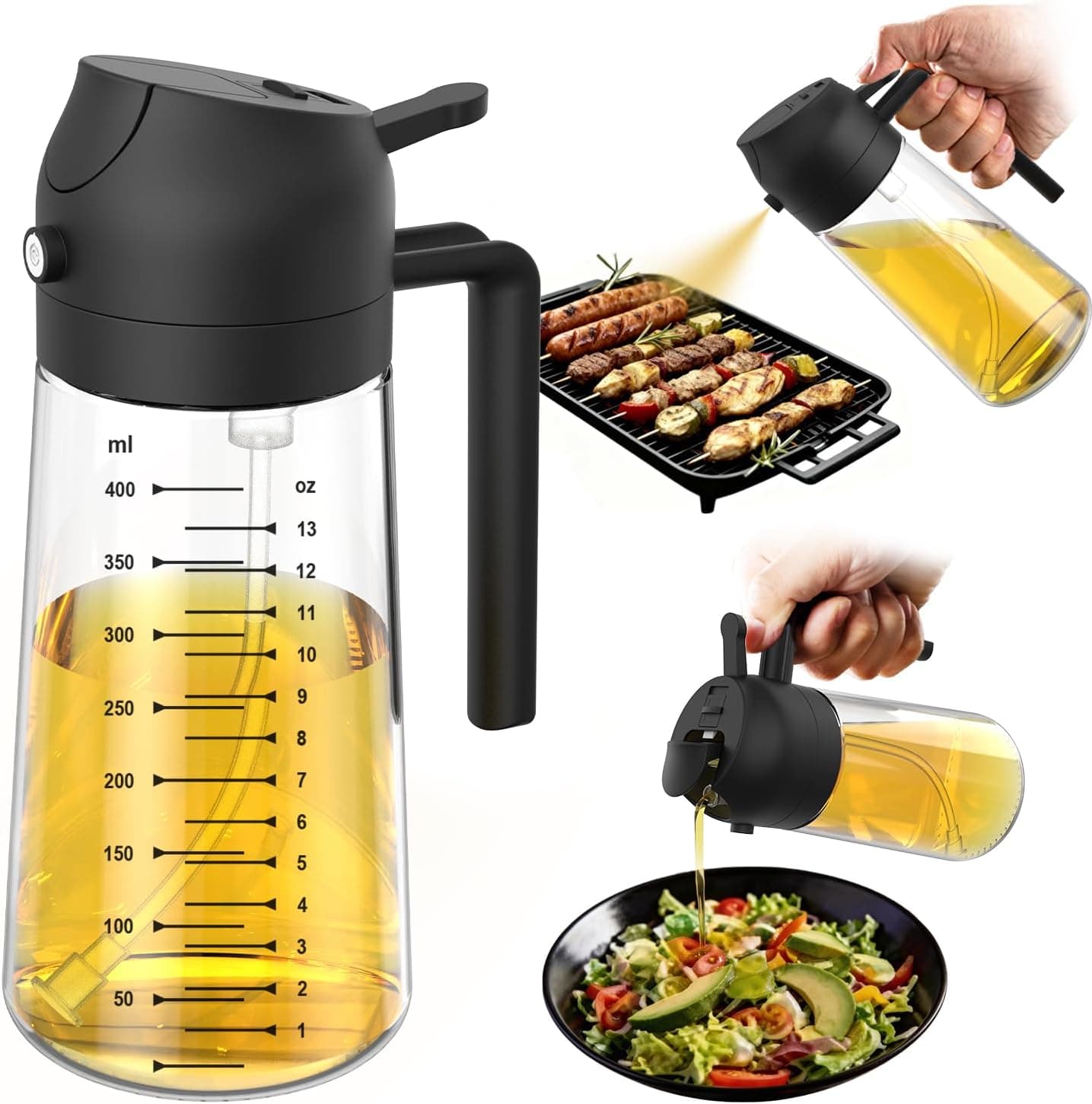 Best Overall
TrendPlain
TrendPlain 2-in-1 Glass Oil Sprayer, 16 oz
Best for one bottle that both mists and pours
Two modes in one bottle: a mist for coating food evenly and a pour spout for measuring into a pan. That combination is what stops most people keeping a second bottle on the counter. Glass rather than clear plastic means no plastic taint and an easier job getting it properly clean.
16 oz glass, spray or pour
Spray and pour in one bottle removes the need for a second one
Glass body avoids the plastic taint oil picks up over time
Dark bottle limits the light exposure that degrades oil
Easier to clean thoroughly than a sealed plastic sprayer
16 oz is a large capacity, so oil can sit long enough to oxidize
Glass is breakable on a patio or a hard kitchen floor
No dip-tube filter stated, so infused or unfiltered oils will still block it
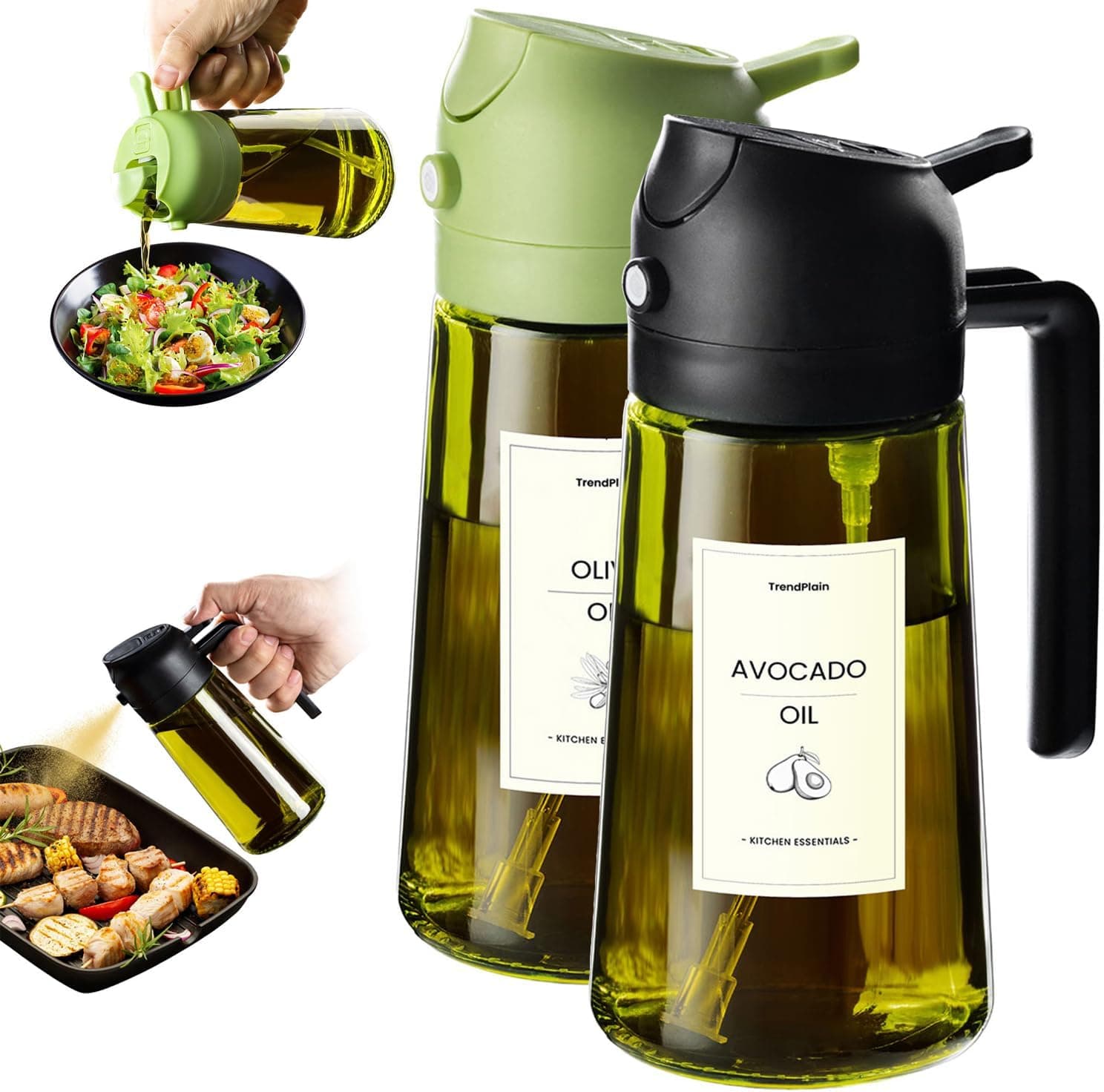 Best Anti-Clog
TrendPlain
TrendPlain Original Oil Dispenser Bottle, 16 oz
Best for oils that tend to block a fine nozzle
The anti-blockage spout is the feature that matters most in this category, because nearly every oil sprayer complaint traces back to hardened oil in the nozzle. Two modes cover misting and pouring. Still reserve it for thin refined oils — no spout design tolerates herb fragments or sediment indefinitely.
16 oz, 2-in-1, anti-blockage spout
Anti-blockage spout addresses the most common failure mode
Spray and pour modes in one bottle
16 oz covers a lot of cooking between refills
Straightforward design with little to go wrong
No spout design tolerates infused or unfiltered oils indefinitely
16 oz capacity means oil can age before it is used up
Glass body is breakable in an outdoor cooking area
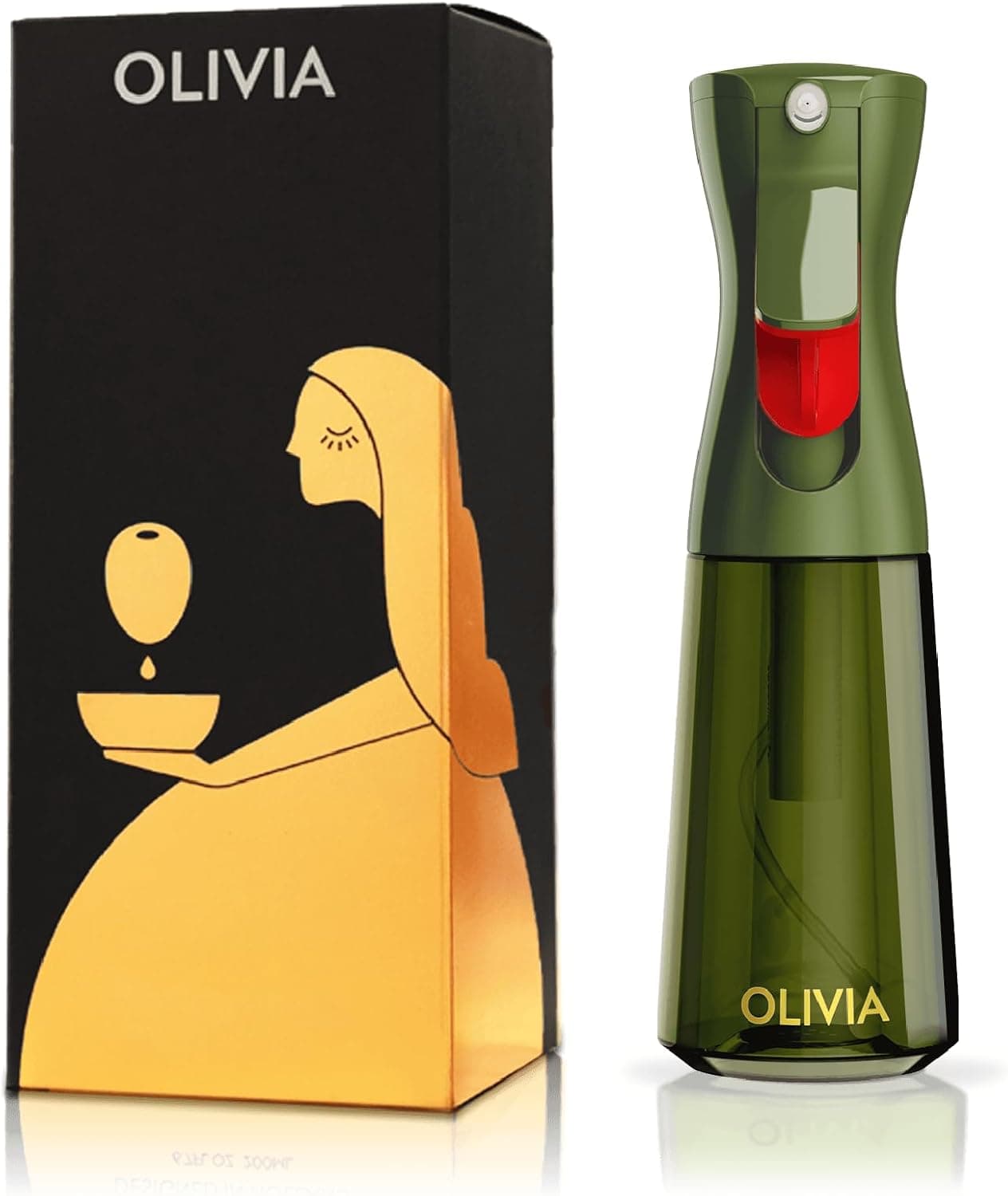 Finest Mist
FLAIROSOL
FLAIROSOL Olivia Signature Oil Sprayer, 200 ml
Best for the thinnest even coat on vegetables
A continuous fine mist rather than a per-squeeze burst, which is what puts an even film on a tray of vegetables using a fraction of the oil brushing would need. Less oil on the food also means less fat dripping into the fire. The anti-drip head addresses the mess that puts people off refillable sprayers.
200 ml, continuous mist, anti-drip
Continuous fine mist gives even coverage from one action
Anti-drip head keeps the bottle and the shelf clean
200 ml is small enough that oil gets used before it ages
Refillable glass rather than a disposable aerosol
Mist only, so a separate bottle is needed for pouring
Fine nozzles are the most sensitive to thick or unfiltered oils
Smaller capacity means refilling more often
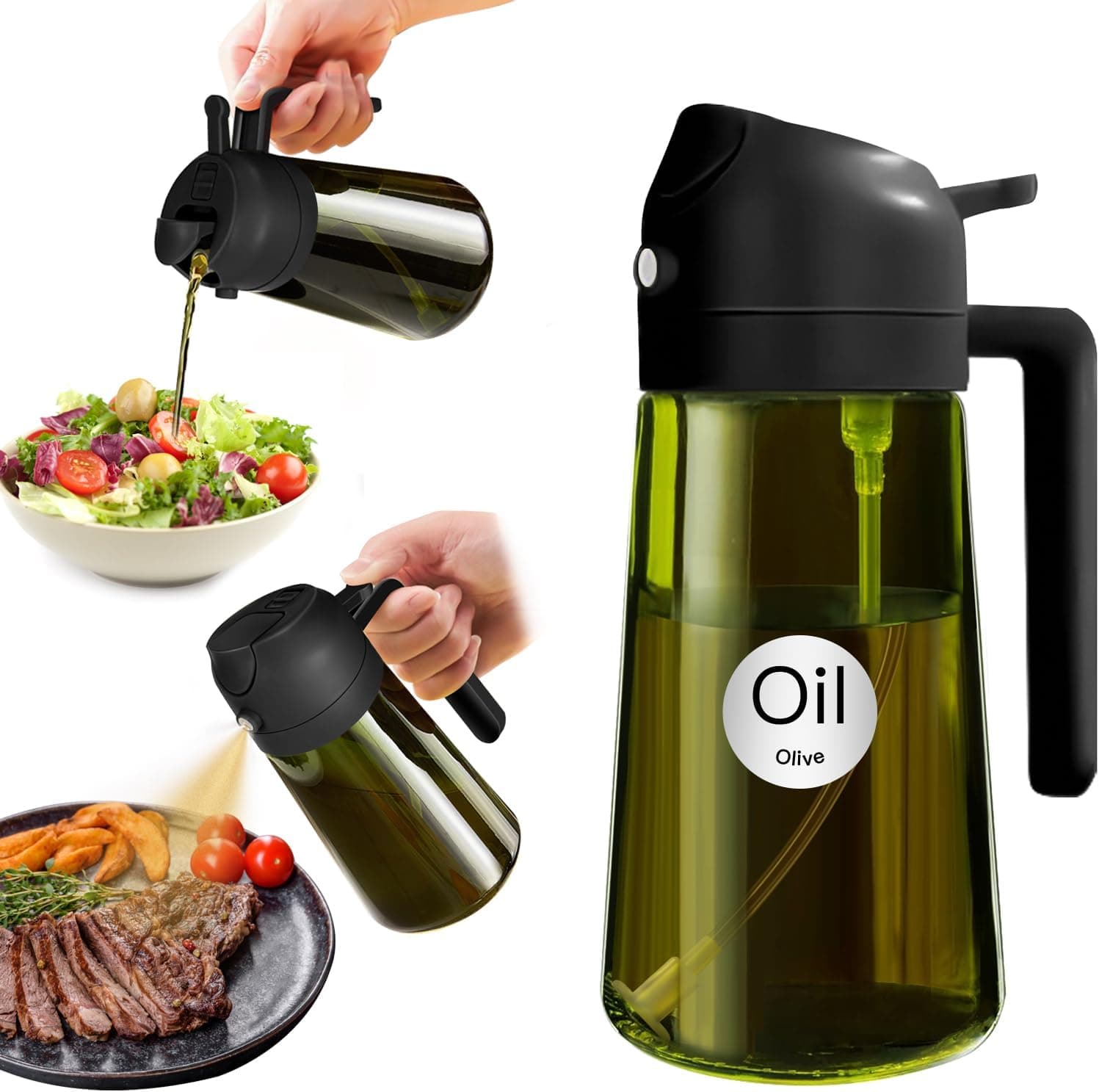
YARRAMATE
YARRAMATE Dark Glass Oil Sprayer, 16 oz
Best for keeping oil out of the light
Light degrades oil, and a dark glass body slows that down considerably compared with a clear bottle sitting on a windowsill. Food-grade construction with both spray and pour modes. The same capacity caveat applies as with any large bottle — fill small and use it up.
16 oz dark glass, spray and pour
Light-blocking dark glass slows oil degradation
Food-grade construction throughout
Both spray and pour modes in one bottle
Glass cleans more thoroughly than plastic
Dark glass makes the remaining level harder to judge at a glance
16 oz encourages filling more than you will use quickly
Glass body is breakable
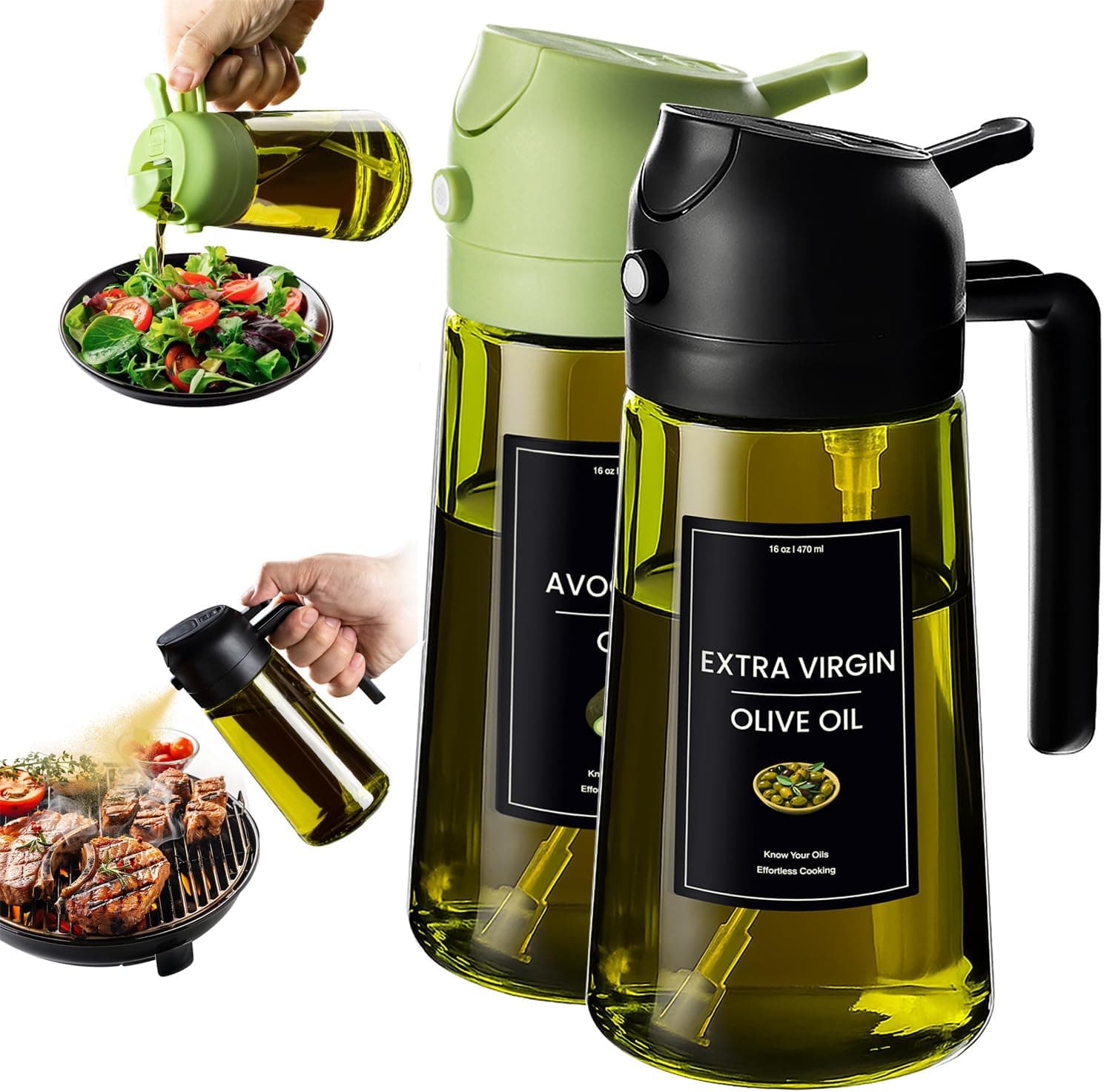
CXINYI
CXINYI 2-in-1 Oil Dispenser and Sprayer, 16 oz
Best for a light-proof bottle at a larger capacity
Light-proof glass with both spray and pour modes at the common 16 oz size. The light protection is the substantive feature here — oil kept in clear glass on a sunny counter degrades noticeably faster. As with every large bottle, fill it part way rather than to the top.
16 oz light-proof glass, spray or pour
Light-proof glass protects oil from degradation
Spray or pour from a single bottle
Glass body cleans more thoroughly than plastic
Familiar 16 oz size for regular cooking
Opaque body makes checking the level awkward
Large capacity encourages oil sitting longer than it should
Glass is breakable in an outdoor cooking area
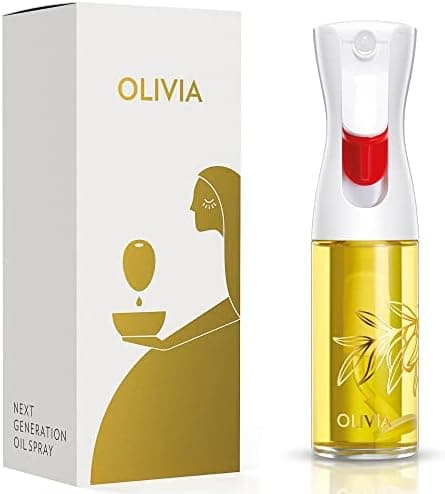
FLAIROSOL
FLAIROSOL Olivia Signature Oil Sprayer, 130 ml
Best for small batches and consistently fresh oil
The smallest bottle here at 130 ml, which is genuinely an advantage rather than a limitation — oil oxidizes in the bottle, and a small one gets emptied and refilled before that becomes a problem. Same fine mist and anti-drip head as the larger Flairosol. Compact enough to keep beside the grill.
130 ml, fine mist, anti-drip
130 ml gets used up before oil has time to oxidize
Fine mist for even coverage with minimal oil
Anti-drip head keeps the outside clean
Compact enough to keep next to the cooker
Small capacity means frequent refilling for heavy use
Mist only, with no pour mode
Fine nozzle needs thin refined oils to stay clear
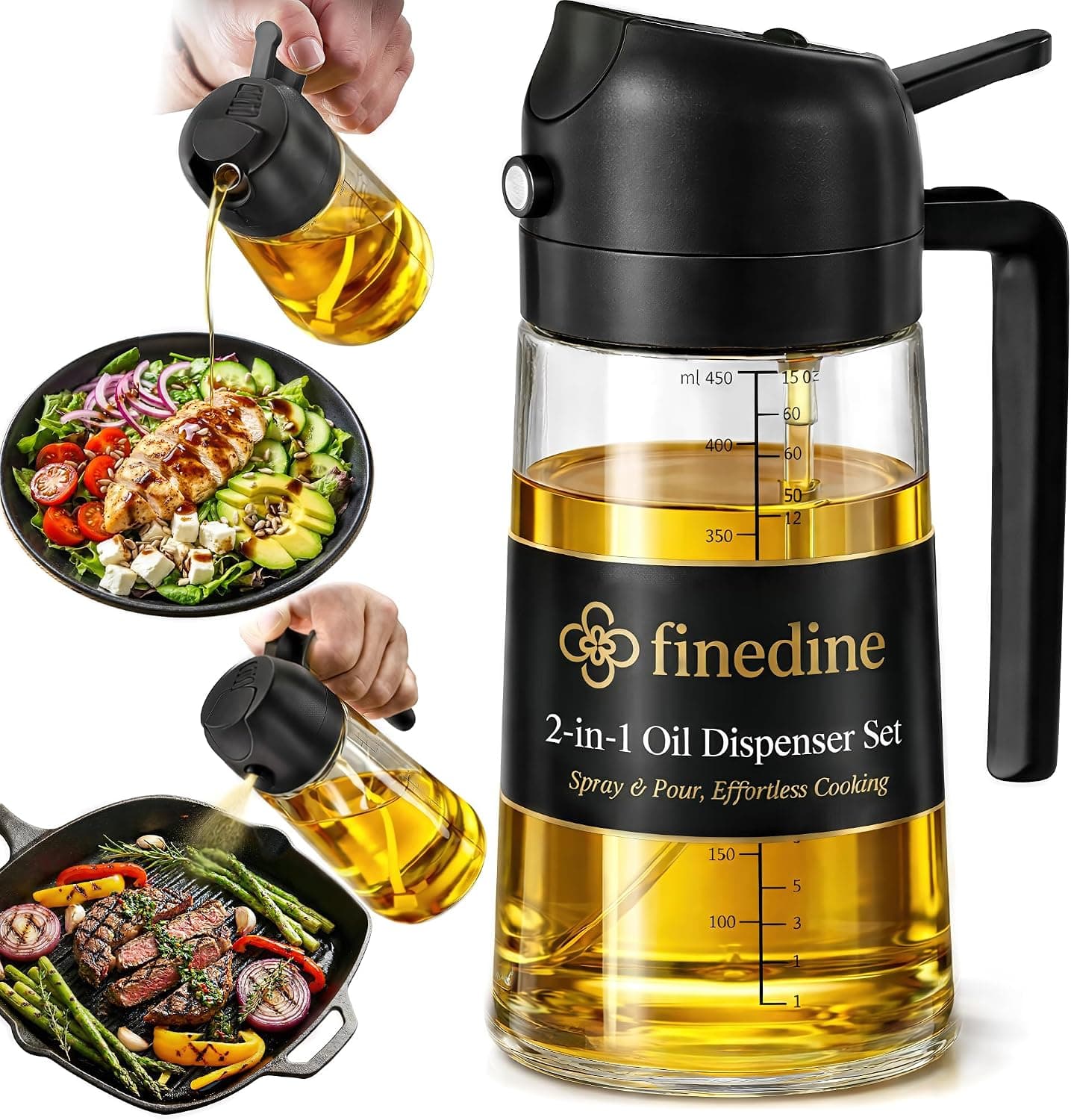
FineDine
FineDine Glass Oil Sprayer, 16 oz
Best for switching between misting and measuring
Mist and stream modes in a glass bottle with an anti-drip spout. The stream mode is the practical half — a mist is for coating food and a stream is for measuring into a pan, and having both means not keeping a second bottle. Glass keeps the flavor clean and makes a thorough wash possible.
16 oz glass, mist or stream
Mist and stream cover both coating and measuring
Anti-drip spout keeps the bottle and counter clean
Glass body avoids plastic taint
16 oz covers regular cooking between refills
Clear glass gives oil no protection from light
Large capacity means oil may age before it is finished
Glass is breakable around a grill
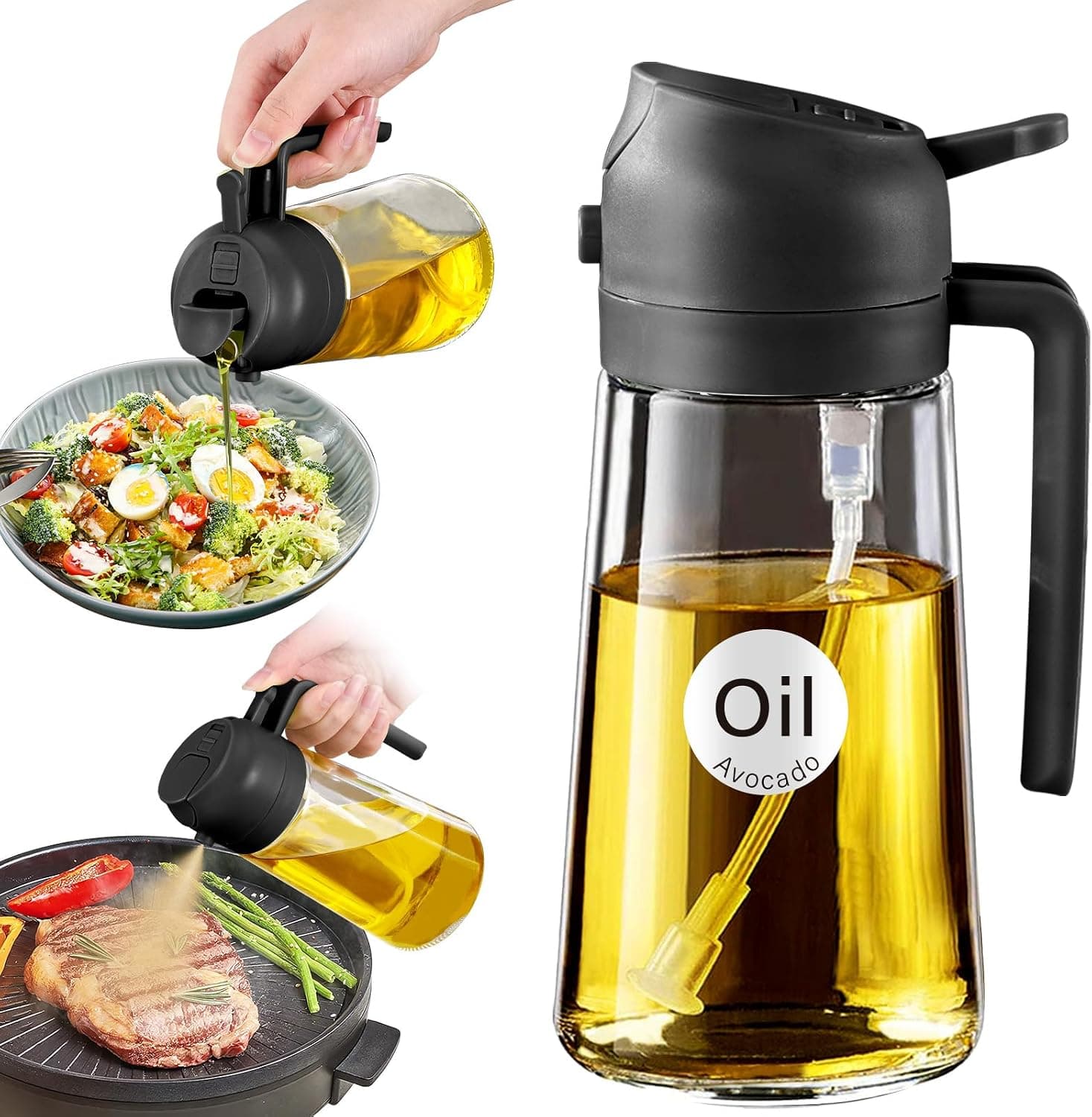
YARRAMATE
YARRAMATE 16 oz 2-in-1 Glass Olive Oil Sprayer
Best for switching between a mist and a pour without a second bottle
A 2-in-1 glass bottle that both mists and pours, so one vessel coats food evenly and measures a stream into a pan. Glass keeps the oil clean of plastic taint and makes the level easy to see. The 16 oz capacity is generous, which is convenient for topping up less often but means oil can sit and oxidize before it is used — the argument for refilling in smaller amounts stands with any large sprayer.
16 oz glass, 2-in-1 spray and pour
Mist and pour in one bottle covers coating and measuring
Glass body avoids plastic taint and shows the oil level
Food-grade build stated for the parts that contact the oil
16 oz is large enough that oil may age before it is finished
Clear glass gives the oil no protection from light
Glass is breakable around a grill
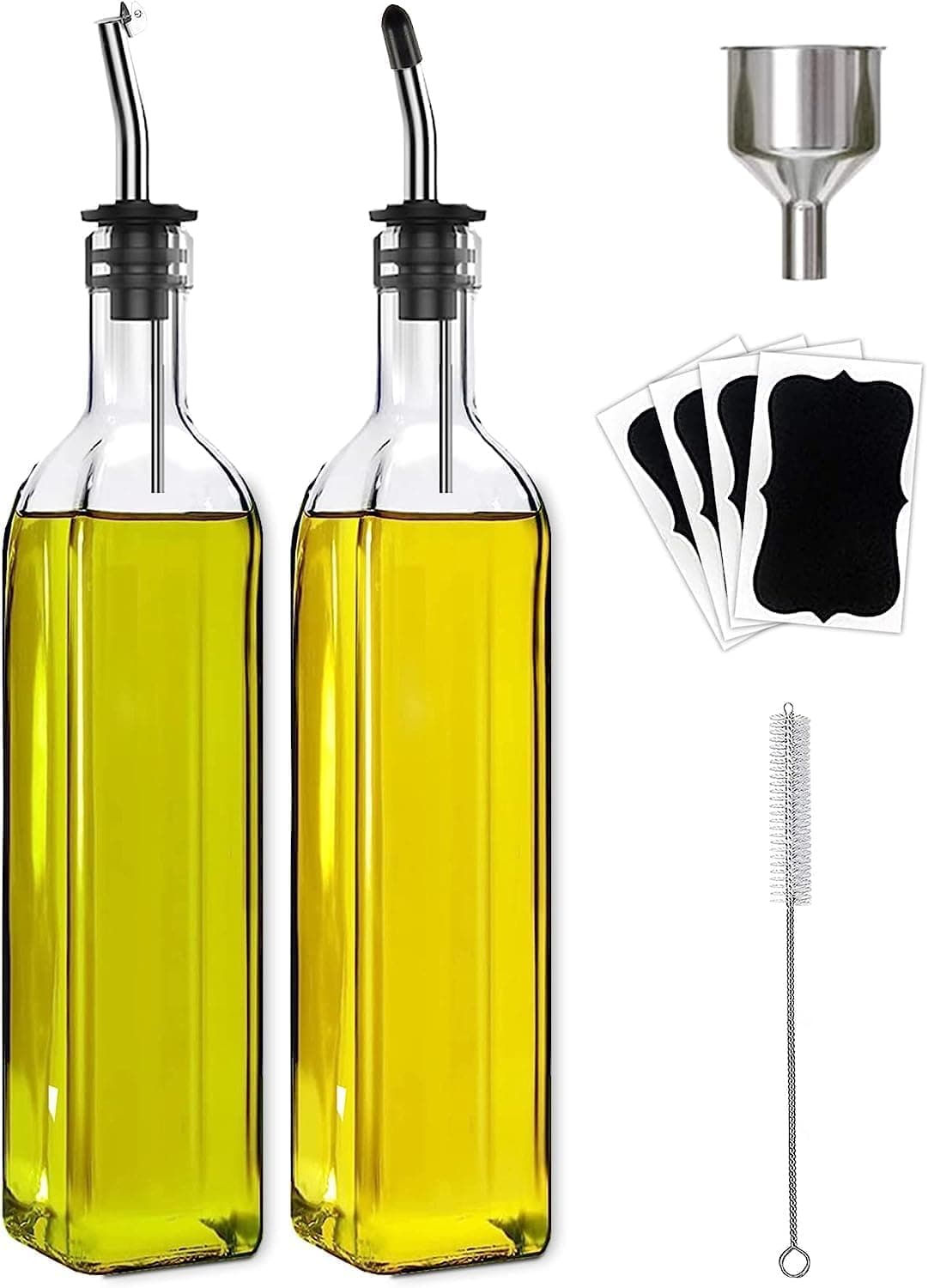
Leaflai
Leaflai Glass Oil & Vinegar Dispenser Set, 2 × 500 ml
Best for a pour-spout dispenser that never clogs
A two-bottle glass dispenser set with stainless pour spouts, not an atomizing sprayer — which is exactly why it never clogs. A pour spout lays down a controlled stream for oiling a pan or dressing food, at the cost of the fine mist that coats a vegetable with a fraction of the oil. The set includes both bottles, spouts, labels, a brush and a funnel, which makes it a tidy oil-and-vinegar pair for the prep counter rather than a grill-side mister.
2 × 500 ml glass, stainless pour spouts
Pour spouts have no fine nozzle to clog, unlike a sprayer
Two 500 ml bottles keep oil and vinegar side by side
Glass body avoids plastic taint and cleans thoroughly
Labels, brush and funnel included for filling and refilling
Pours a stream only — no mist, so it uses more oil per coat
500 ml is a large volume for oil that oxidizes over time
Clear glass gives the oil no protection from light
| Product | Best for | Key feature | Main drawback | Link |
|---|---|---|---|---|
| TrendPlain 2-in-1 Glass Oil Sprayer, 16 oz | one bottle that both mists and pours | 16 oz glass, spray or pour | 16 oz is a large capacity, so oil can sit long enough to oxidize | View on Amazon |
| TrendPlain Original Oil Dispenser Bottle, 16 oz | oils that tend to block a fine nozzle | 16 oz, 2-in-1, anti-blockage spout | No spout design tolerates infused or unfiltered oils indefinitely | View on Amazon |
| FLAIROSOL Olivia Signature Oil Sprayer, 200 ml | the thinnest even coat on vegetables | 200 ml, continuous mist, anti-drip | Mist only, so a separate bottle is needed for pouring | View on Amazon |
| YARRAMATE Dark Glass Oil Sprayer, 16 oz | keeping oil out of the light | 16 oz dark glass, spray and pour | Dark glass makes the remaining level harder to judge at a glance | View on Amazon |
| CXINYI 2-in-1 Oil Dispenser and Sprayer, 16 oz | a light-proof bottle at a larger capacity | 16 oz light-proof glass, spray or pour | Opaque body makes checking the level awkward | View on Amazon |
| FLAIROSOL Olivia Signature Oil Sprayer, 130 ml | small batches and consistently fresh oil | 130 ml, fine mist, anti-drip | Small capacity means frequent refilling for heavy use | View on Amazon |
| FineDine Glass Oil Sprayer, 16 oz | switching between misting and measuring | 16 oz glass, mist or stream | Clear glass gives oil no protection from light | View on Amazon |
| YARRAMATE 16 oz 2-in-1 Glass Olive Oil Sprayer | switching between a mist and a pour without a second bottle | 16 oz glass, 2-in-1 spray and pour | 16 oz is large enough that oil may age before it is finished | View on Amazon |
| Leaflai Glass Oil & Vinegar Dispenser Set, 2 × 500 ml | a pour-spout dispenser that never clogs | 2 × 500 ml glass, stainless pour spouts | Pours a stream only — no mist, so it uses more oil per coat | View on Amazon |
How long it lasts and how to care for it
Two to three years for the bottle, though a good one outlives that if the nozzle is cleaned. Replace immediately if oil smells rancid and will not wash out.
- Refill in small amounts and use it up rather than topping off, so old oil never sits at the bottom.
- Flush the nozzle with hot water after any oil that is not thin and refined.
- Never fill a sprayer with marinade, infused oil or anything containing solids unless the model has a filter designed for it.
- Keep it out of direct sun and away from the grill cabinet, where residual heat accelerates oxidation.
Problems this gear solves
Questions people actually ask
Almost always because of what went in it. Thick oils, unfiltered olive oil, infused oils with herb fragments and anything containing solids will block a fine nozzle. Refined, thin oils spray indefinitely. A twenty-minute soak in hot soapy water clears most clogs that have already formed.
Not onto a hot one, and never near an open flame — atomized oil ignites readily and the flame can travel back up the spray. Oil the food instead, or wipe a cold grate with an oiled cloth held in tongs.
For grilling, yes on two counts: you control what is in it, and there is no flammable propellant. Aerosol cans are convenient but the propellant is the reason they carry an explicit warning about use near heat.
A high-smoke-point refined oil — grapeseed, canola or refined sunflower. Seasoning requires taking the oil above its smoke point so it polymerizes, and a low-smoke-point oil like extra-virgin olive turns bitter and sticky instead of hard.
Fill small amounts and use them up rather than topping off. Oil oxidizes in the bottle, and old oil is both thicker — which is what clogs the mechanism — and noticeably worse tasting. Rancid smell that will not wash out means the bottle is finished.
pitandsear participates in the Amazon Services LLC Associates Program. If you buy through a link on this page we may earn a commission at no extra cost to you. Full disclosure.