RESIDUE & DEBRIS
Wire Bristles From the Brush Ending Up in Food
THE SHORT ANSWER
Stop using the brush immediately and inspect the grate under a bright light before you cook again — a wire bristle that lodges in the throat or intestine is a documented injury that sends people to the hospital every year. Tug a handful of bristles hard; if any come loose, toss the brush. Bristle-free scrapers, coiled-wire brushes and a folded ball of foil held in tongs all clean a hot grate without shedding.
pitandsear participates in the Amazon Services LLC Associates Program. If you buy through a link on this page we may earn a commission at no extra cost to you. Full disclosure.
Check these first (they cost nothing)
- Grab a handful of bristles and pull hard. If anything at all comes loose in your hand, the brush is finished — stop using it now, not after this cook.
- Inspect the grate under a bright light before you cook, running a folded paper towel along each bar. A loose bristle snags the paper.
- Look at the brush head for splayed, bent or missing sections. Uneven wear means the wire is fatiguing.
- Check how old it is. A wire brush used regularly should be replaced every season regardless of how it looks.
What's actually causing it
These are ordered deliberately. Number one is the cause that turns out to be the answer most often, so work down the list rather than jumping to the one that sounds most dramatic.
The brush has fatigued and is shedding wire
Most commonHow to confirm it
The tug test releases bristles, or the head looks thin and splayed compared to when it was new. Twisted-wire brushes fail this way as the wire work-hardens through repeated heat cycles.
How to fix it
- Stop using it immediately and put it in the trash — not back in the grill cabinet where someone else will pick it up.
- Inspect the entire grate under a bright light, running a folded paper towel along the top and underside of every bar.
- Wipe the firebox and flame tamers as well; bristles that fall through end up there and get flicked back up later.
- Replace it with a coiled-wire or bristle-free design, or use a tightly folded ball of aluminum foil held in long tongs.
Repair or replace — Replace the brush. This is not a maintenance issue, it is an end-of-life issue, and the failure mode is an injury.
What you'll need
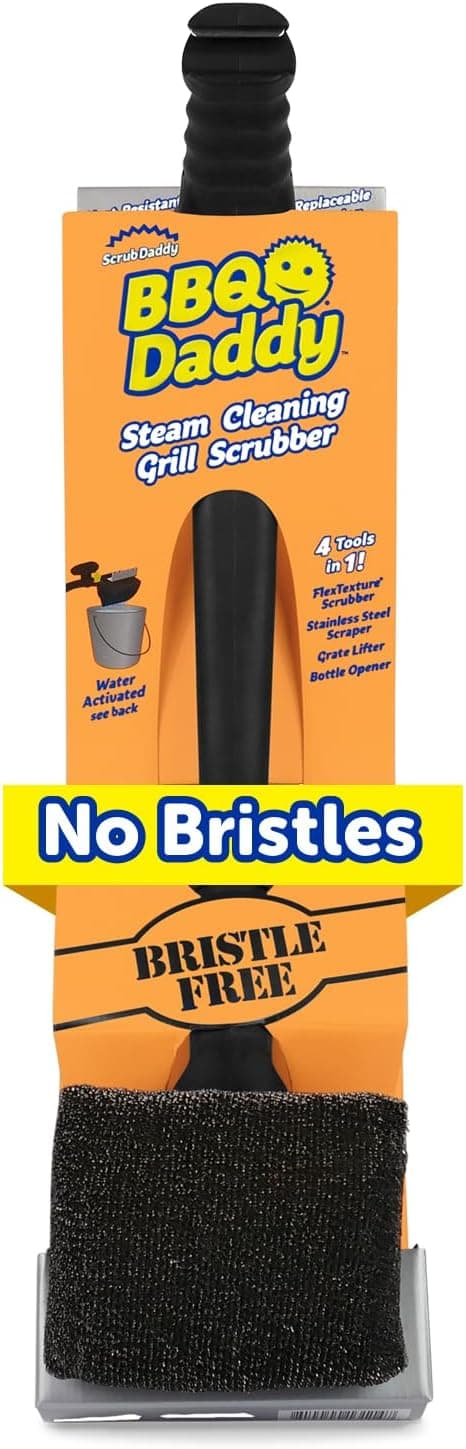 Best Overall
Scrub Daddy
Scrub Daddy BBQ Daddy Grill Brush
Best for cleaning a hot grate with nothing loose to shed
Pairs a steel scraper for hardened carbon with a scrub head made from the temperature-reactive material the brand is known for, which firms up and softens with heat. Being bristle-free removes the failure mode this whole category exists to warn about — there are no loose wires to shed onto the grate. Two cleaning surfaces on one head means you actually use the right one.
Bristle-free, steel scraper + scrub head
Scrubbing a cold grate with too much force
CommonHow to confirm it
You find yourself leaning into the brush to shift residue. Hot residue releases with almost no pressure; cold residue requires the force that snaps wire.
How to fix it
- Clean at the end of the cook while the grate is still above about 400°F.
- Work along the length of the bars rather than across them, which loads the wire sideways.
- For cold, hardened residue, soak the grates in hot water with dish soap instead of forcing a brush.
- Use a flat scraper edge for hardened carbon — that is what an edge is for, not bristles.
Repair or replace — Fix it yourself by changing timing. Cleaning hot doubles the life of any brush and removes the force that breaks bristles.
A bristle is already on the grate and gets picked up by food
CommonHow to confirm it
You have found one bristle, which means you should assume there are others. A single failing brush typically sheds several before anyone notices.
How to fix it
- Do not cook on that grate until it has been inspected properly under strong light.
- Run a folded paper towel or a damp cloth along every bar, top and underside — the fibers snag on anything protruding.
- Check the firebox floor and the tamers, then wipe them.
- If in any doubt, wash the grates in hot soapy water and dry them with heat rather than relying on a visual check alone.
Repair or replace — Fix it yourself with an inspection. The grate is fine; the brush is the problem and it needs to be gone.
Wrong brush material for the grate
Less commonHow to confirm it
Stainless bristles on porcelain-enamel bars. The coating is chipping as well as bristles shedding, so you have two kinds of debris at once.
How to fix it
- Match the brush to the grate: brass or nylon for porcelain enamel, stainless only for bare stainless or cast iron.
- Switch to a bristle-free scraper, which is safe on every grate material.
- Inspect the coating for existing chips and plan on replacing the grate if it has started shedding.
- Never use a powered wire wheel on a coated grate.
Repair or replace — Replace the brush with the right material. The damage already done to the coating is not reversible.
What you'll need
How to choose grill brushes & scrapers →A bristle has been swallowed
RareHow to confirm it
Someone reports throat pain, a sensation of something stuck, pain on swallowing, or abdominal pain after a meal cooked on a brushed grate.
How to fix it
- Seek medical attention rather than waiting to see whether it passes. A wire fragment can lodge in the throat, the esophagus or further down.
- Tell the clinician specifically that a grill brush bristle is suspected — it changes what they look for and how they image it.
- Do not attempt to induce vomiting.
- Keep the brush; it helps confirm what was ingested.
Repair or replace — Call a professional. This is the one item on this site where the correct answer is a doctor, not a repair.
All the causes side by side
| Cause | How to confirm | Fix time | Part needed | Difficulty |
|---|---|---|---|---|
| The brush has fatigued and is shedding wire | The tug test releases bristles, or the head looks thin and splayed compared to when it was new. Twisted-wire brushes fail this way as the wire work-hardens through repeated heat cycles. | 15 minutes | Grill Brushes & Scrapers | Easy |
| Scrubbing a cold grate with too much force | You find yourself leaning into the brush to shift residue. Hot residue releases with almost no pressure; cold residue requires the force that snaps wire. | 5 minutes | None | Easy |
| A bristle is already on the grate and gets picked up by food | You have found one bristle, which means you should assume there are others. A single failing brush typically sheds several before anyone notices. | 20 minutes | None | Easy |
| Wrong brush material for the grate | Stainless bristles on porcelain-enamel bars. The coating is chipping as well as bristles shedding, so you have two kinds of debris at once. | 10 minutes | Grill Brushes & Scrapers | Easy |
| A bristle has been swallowed | Someone reports throat pain, a sensation of something stuck, pain on swallowing, or abdominal pain after a meal cooked on a brushed grate. | Seek care immediately | None | Involved |
Stop it from coming back
This is the one problem on the site where prevention is not optional, because the failure mode is a hospital visit rather than a ruined dinner. The habit is thirty seconds long: tug a handful of bristles hard before every cook, and run a folded paper towel along the bars afterward. A brush that passes the tug test is safe to use; one that sheds a single bristle goes in the trash the same day.
Beyond the tug test, replace any wire brush every season as a matter of course, and clean while the grate is still hot so you are never forcing the wire. If you would rather remove the failure mode entirely, a coiled-wire brush, a solid scraper or a wooden paddle all clean a hot grate perfectly well and have nothing loose to shed.
Related problems
Questions people actually ask
Seek medical attention rather than waiting. Symptoms to act on include throat pain, a feeling of something stuck, pain on swallowing, and abdominal pain. Tell the clinician specifically that a grill brush bristle is suspected, because it affects what they look for and how they image it.
On a hot grate, yes. Coiled-wire brushes, solid scrapers and wooden paddles all remove residue well when the metal is above about 400°F. They are noticeably worse on a cold, hardened grate — but so is a bristle brush, which is where the bristles break.
Every season with regular use, and immediately if any bristle comes loose under a firm tug. The wire fatigues through repeated heat cycling, and the failure is not gradual enough to spot by eye — the tug test is the only reliable indicator.
It works well. Crumple a sheet into a tight ball, grip it with long tongs, and scrub the hot grate. It conforms to the bars, costs nothing, and has nothing to shed. The main downside is that it does not reach the underside of the bars as easily as a shaped brush.
No. One loose bristle means the wire has begun to fatigue, and the rest of the head is the same age and has taken the same heat cycles. A brush that sheds one will shed more, and you will not see the next one.
Sources
pitandsear participates in the Amazon Services LLC Associates Program. If you buy through a link on this page we may earn a commission at no extra cost to you. Full disclosure.